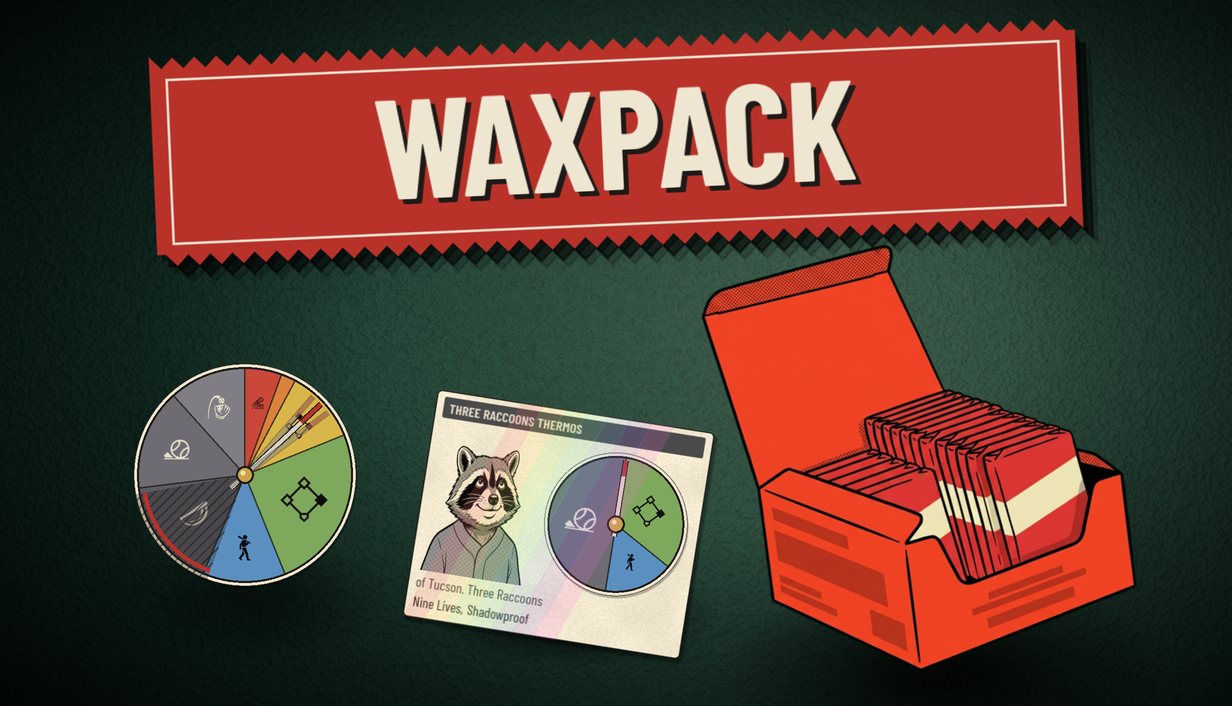
Waxpack
A baseball roguelite where the lineup is the build. Nine players, twenty games, one spin an at-bat, and a run total that should not be possible. The cards are the collection. Something will go wrong.
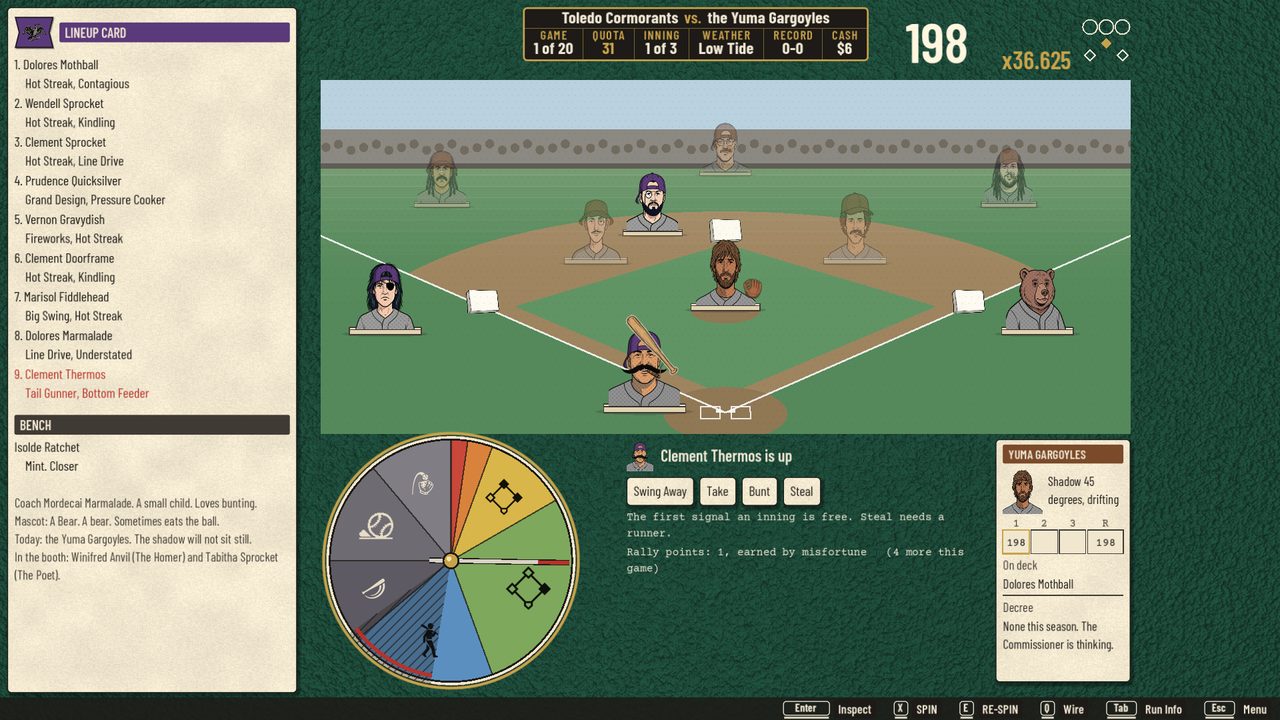
Every player is a baseball card. The back of the card is a spinner disc: home run, triple, double, single, walk, strikeout, groundout, flyout, and whatever else their quirks have added. An at-bat is one spin. The disc is the probability, so you can read a hitter's home run chance as a slice of pie. The pitcher does not spin. A pitcher has a shadow, an arc that lies over part of your disc and turns anything under it into an out. The good ones have wide shadows. Land the needle on a boundary and both outcomes happen.
An inning carries one running multiplier. It starts at x1 and heats by one on every play that is not an out, and every scoring play scores its runs times the heat. Outs never cool it. Three outs end it. The quota climbs from 31 runs in the first game of a Wax Box season to 192 in the twentieth. A harder box or a higher stake raises it. The back half of a season wants an inning that gets away from everybody. An inning like that is nine singles in a row, quirks setting each other off, and a counter that catches fire on its way past the number.
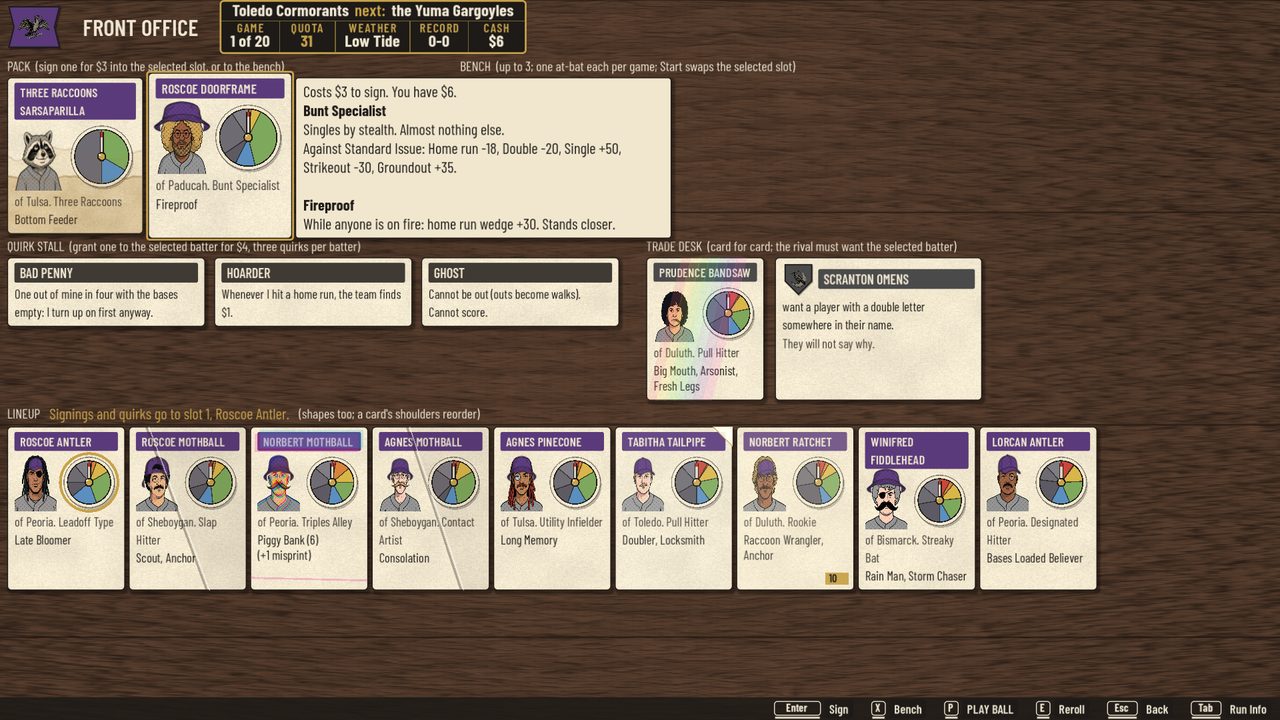
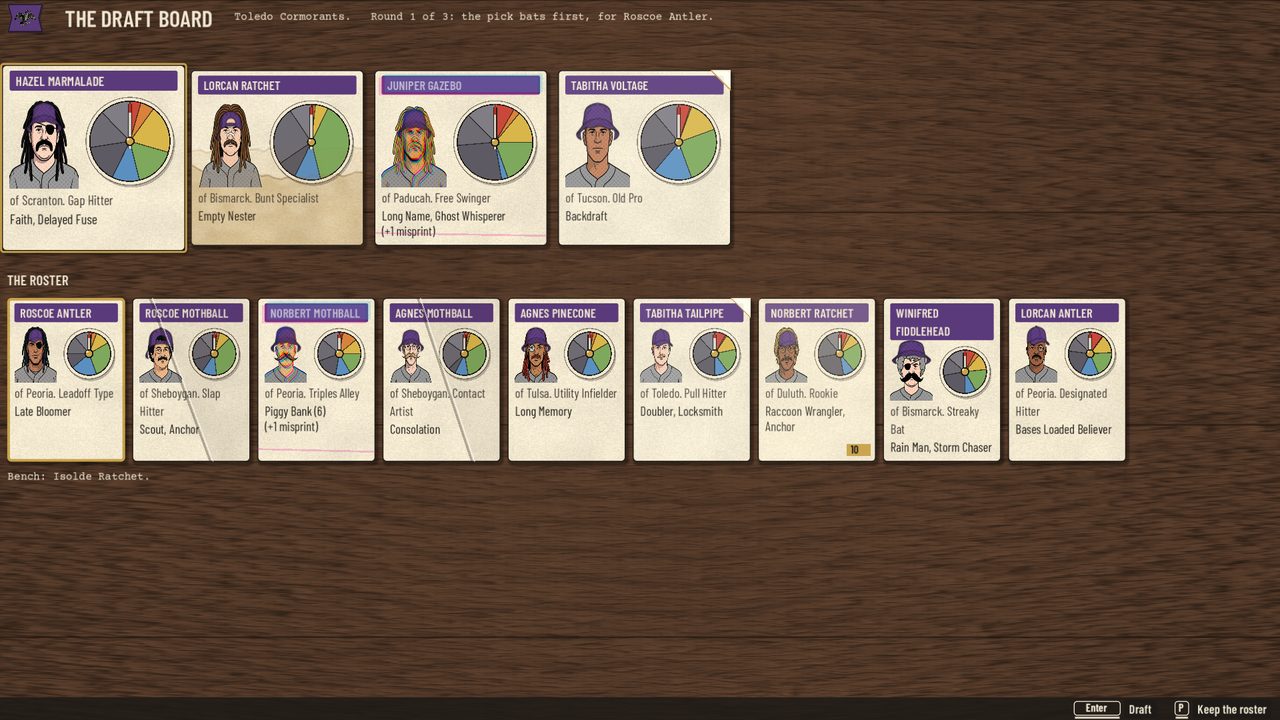
Between games you are in the front office. You sign a player out of a three-card pack, grant quirks, reshape discs and reorder the lineup. Rivals come to the desk wanting one specific player, and they will not say why. The weather has opinions. The Commissioner issues a decree each season and means it. A boss pitcher arrives with a shaped shadow and a rule twist. Everyone you release, retire, trade or lose to a fire goes into the binder. The binder is the museum of your league's history, and it is the only thing that carries from one season to the next.
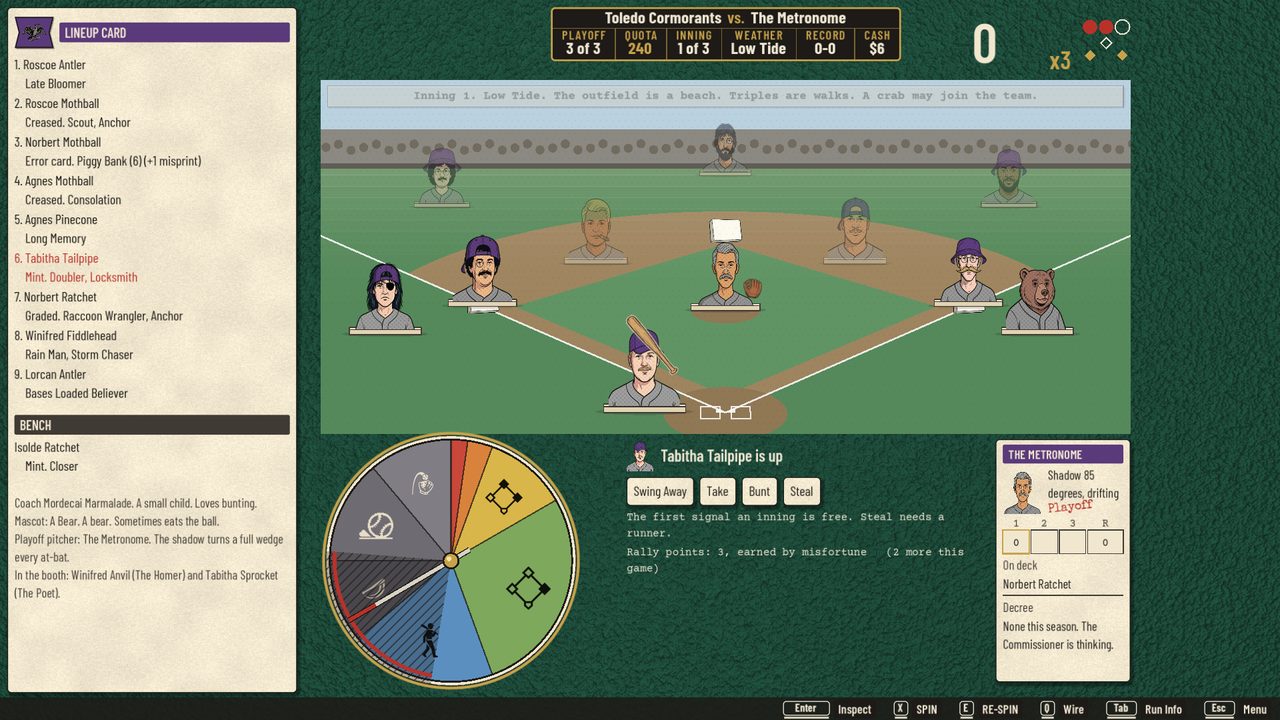
Coming to Steam in 2027, for Windows and Linux, with a free demo first. It plays on Steam Deck.
One disclosure: the player portraits, mascots, team emblems, box paintings and a few event images were generated with image models from the developer's prompts, then hand-keyed and placed. All other art is drawn in the game's own code, and the game contacts no service. The music is synthesized from hand-written scores and is not AI audio.